
Encyclopedia of Pests
| 1 - | Rats | 5 - | Fleas | 9 - | Moths |
|---|---|---|---|---|---|
| 2 - | Mice | 6 - | Bedbugs | 10 - | Moles |
| 3 - | Cockroaches | 7 - | Flies | 11 - | Wasps |
| 4 - | Ants | 8 - | Mosquitoes | 12 - | Ticks |
Rats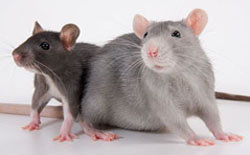 There are about 60 species of rats. The most common rats in Latvia are the brown rat and the black rat. Their biological peculiarity is their high density of habitat and adaptability: rats live in colonies and can survive both in a refrigerator and a boiler room. Their lifespan is 2-3 years. A female becomes sexually mature at the age of two months and can give birth to up to 6-8 litters of 8-12 rats per year. Rats are omnivorous, prefer animal food, but can also eat plant food, prefer high-quality products, and love sweets and chocolate. They have a hard time withstanding starvation – they die in 3-4 days without food, and even faster without water. They are forced to constantly grind down their continuously growing incisors, and any objects, including electrical wiring, are suitable for this purpose.
Damage caused
Rats are carriers of pathogens causing human infectious diseases: rabies, tularemia, bubonic plague, leptospirosis, hemorrhagic fever with renal syndrome. The presence of rats is not only an infectious risk, but also economic damage directly related to the consumption of feed and food products by rats, spoilage of products, fires caused by short circuits of electrical wires when their insulation is damaged, as well as due to the deterioration of the quality of food and feed due to the presence of hair, feces and urine of rodents.
Mice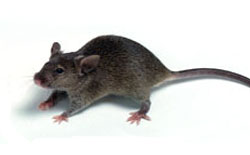 There are 370 species and 1,500 subspecies of mice on Earth. And despite the fact that mice have many enemies and are constantly in mortal danger, they survive. This is explained by the amazing ability of mice to adapt to the environment. They can survive even in a refrigerator with a temperature of up to - 10 degrees. There are especially many of them where food can be easily obtained - bases, warehouses, vegetable stores. In the absence of other food, mice can feed on crumbs, seeds and roots. Due to the peculiarities of their body, mice drink very little water, and can even do without it at all. Mice live in families. Each family has its own territory, which is limited by scent marks. If there is food in this territory, mice can live their entire lives. Mice do not have a seasonal breeding season. On average, a female mouse gives birth to 6-10 cubs about 5 times a year. Sexual maturity in a new generation occurs in 45-50 days. Therefore, it is not difficult to imagine how many mice there will be by summer if in the fall, escaping from the approaching cold, 3-4 mice make their way into the building.
Damage caused
Of course, mice, even if they multiply greatly, will not eat a large amount of food. The main damage is caused by the habit of mice to try everything they can get to and leave their droppings everywhere. Another inconvenience that mice cause is due to the need to grind down their teeth, and in a building inhabited by mice, anything except glass, porcelain and concrete will do for this purpose. Just like rats, mice are a natural reservoir of many infections that are dangerous to humans.
Cockroaches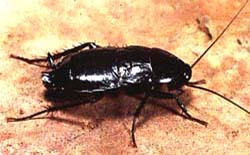 Insects are widespread all over the world. In Latvia, you can find the following types of cockroaches: red (Prussians), black cockroach, American cockroach (appeared in the 20s of the last century, very unstable), Central Asian, ash, brown-striped. Insects love heat, populate mainly heated premises. They actively reproduce all year round. The indestructibility of cockroaches is explained not only by their unpretentiousness, but also by their high fertility. The female cockroach is fertilized only once and lays eggs in a leathery capsule - an edema, which she carries semi-protruding from under her abdomen. During her life, a black cockroach lays 8-22 edemas with 12-18 eggs, a red cockroach - 2-10 edemas with 28-50 eggs in each. Cockroaches are practically omnivorous, feeding on both fresh and spoiled products. They can eat non-traditional products: pepper, ink, leather, etc. In addition, they willingly eat various human and animal secretions and can be mechanical carriers of infectious diseases and helminth eggs.
Damage caused
The consequences of cohabitation of a cockroach with a person have a negative outcome: synanthropic cockroaches are dangerous not only because they spoil food; in addition, they carry various bacteria and eggs of parasitic worms. Bacteria cause dysentery. Typhus, cholera, tuberculosis and other diseases. In the rectum of a black cockroach, eggs of a whipworm and pinworm were found, in addition, in a Prussian there are eggs of a broad tapeworm.
Ants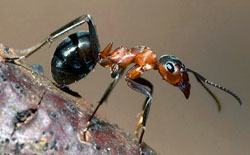 Ants are widespread all over the world. In the temperate zone, black garden ants and pale-legged ants are most common. In the late 40s, red house ants settled in human buildings. This is a heat-loving species, an inhabitant of tropical and subtropical countries. In our country, it can only live in heated rooms. This is a social insect, they live in large families and colonies. Colonies include: females, males, workers, eggs, larvae, pupae. The number of a colony can be hundreds of thousands and even up to 1 million individuals. Worker ants process the food they find with digestive enzymes, transfer the resulting gruel in their crop to the nest and feed it to males and larvae. Ants are omnivorous, but prefer food rich in protein and carbohydrates.
Damage caused
Ants are mechanical carriers of infectious diseases.
Fleas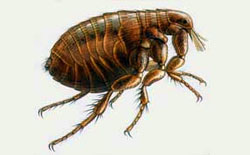 Fleas are small (0.5 - 5 mm) wingless insects with a piercing-sucking mouth apparatus. The body is flattened from the sides, the legs are adapted for jumping. The height of a flea's jump is 1-1.5 m. Males and females feed only on blood. Fleas that parasitize humans, domestic animals and birds, and synanthropic rodents live in populated areas and in apartments. About 1.5 thousand species of fleas are known, but mainly dog fleas, cat fleas, rat fleas, mouse fleas, and less often bird fleas (in attics) are found in human housing in the temperate climate zone. The flea that has the most dangerous epidemiological significance - the human flea - is much less common, the bulk of fleas are cat fleas. The entire development from egg to adult from 16 to 50 days and extends up to 1.5 years under unfavorable conditions. Life expectancy is 3.5 months - 1 year, laying 100-400 eggs. The presence of fleas in the basement indicates unsatisfactory sanitary conditions of basements, the presence of stray animals and rodents.
Damage caused
When losing their "breadwinner", fleas can move from one host to another. In this way, fleas transmit the pathogen of infectious diseases from a sick organism to a healthy one. Fleas can transmit the pathogens of pseudo-tuberculosis, listoreosis, tularemia, typhoid infections, etc. Fleas of rodents, cats and dogs participate in the transmission of rat typhus.
Bedbugs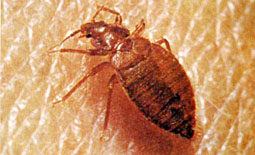 The most common type of domestic blood-sucking insect is the bedbug. It has a strongly flattened reddish-brown body covered with thick hairs. The insects are wingless, having lost their wings as a result of parasitism. Bedbugs emit an unpleasant specific odor, attack and feed on blood at night. Very hungry bedbugs, when numerous, can attack under artificial lighting. Bedbugs have a well-developed sense of smell, drink blood at all stages of development, during one bloodsucking (about 10-15 minutes) the bedbug drinks 7 ml of blood, which is equal to its double weight. Usually feeds regularly every 24-28 hours, mainly human blood, but can also attack domestic animals, birds, rats and mice. Bedbugs can fast for a long time, adults - up to 5 months, larvae - up to 1 year, live up to 15 months. They do not tolerate sudden temperature fluctuations well, this can kill them. At a temperature of -15 degrees they live for one day.
Damage caused
Bedbugs are carriers of pathogens of infectious diseases.
Flies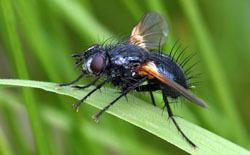 Flies are insects with one pair of membranous wings, a large, very mobile head and a mouth apparatus in the form of a proboscis, adapted for sucking or licking liquid food. Flies that live in human dwellings or near them are called synanthropic. These include: houseflies, small houseflies, house flies, market flies, stingers, gray meat flies, blue and green flies, carrion flies, and fruit flies. Most flies develop in rotting waste, human and animal excrement, corpses, etc. The fly larva is transparent, worm-like, does not have a separate head, at the end of development the larvae pupate, for which they crawl to dry, cool places. The duration of development depends on the air temperature and is 10-150 days. A fly emerging from a pupa is unable to fly until its wings dry out.
Damage caused
Flies are mechanical carriers of infectious disease pathogens: intestinal infections, purulent-septic infections, tuberculosis, helminth eggs, etc. Fly eggs are not visible and can be swallowed and cause intestinal miasma. Especially in children aged 3-5 years, due to low stomach acidity.
Mosquitoes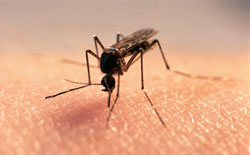 Mosquitoes are small (4-7 mm) blood-sucking dipterous insects. The body is slender, cylindrical, the legs are long and thin. The wings are transparent, folded onto the abdomen when at rest. There is a thin, long, piercing proboscis on the head. The female mosquito lays eggs in stagnant warm water with vegetation or an organic substrate. The duration of development is determined by the water temperature and ranges from 40 hours to 8 days. For the development of larvae in the reservoir, there must be a mooring line (this is vegetation or floating objects). Mosquito larvae do not live where there is a wave and at great depth, the optimal depth is 1.5 - 2 m. The mooring line is needed for feeding. Mosquitoes fly up to 3 km, and with a tailwind up to 5 km from the breeding site.
Damage caused
Mosquitoes carry up to 50 viral, bacterial and parasitic diseases, including malaria, tularemia, and anthrax. Malaria is spread by mosquitoes of the genus Anopheles. The causative agent of this disease (malaria plasmodium) enters the human bloodstream during a bite along with the insect's saliva. A mosquito that has drunk the blood of a malaria patient can infect another person in a week or so. This time is necessary for the plasmodium to complete its life cycle in the insect's body. Despite the fact that malaria foci are located in the southern regions, it is possible that the infection will be brought to the northern regions, where there are enough of its distributors - mosquitoes of the genus Anopheles. Mosquitoes of other genera carry encephalitis, filariasis, and helminthic lesions of internal tissues.
Moths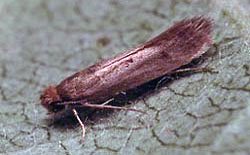 Moth is an arthropod flying insect that lives in warm places on our planet. There are about 300 varieties of this butterfly. But in our country, the most common are clothes moth and grain moth. Clothes moth feeds on wool, leather, fur and other textiles. Grain moth destroys cereals, flour, dried fruits and other food products. Moths reproduce by laying larvae, from which caterpillars appear, and then the butterflies themselves. At one time, a female moth lays up to 100 eggs. The lifespan of a moth is 1-2 months, during which the insect manages to cause significant damage to a person.
Damage caused
Remember how a grey butterfly flies in front of the TV in the evening, you slap it with a newspaper and continue watching with a sense of accomplishment. But this butterfly does not spoil your wardrobe, but is dangerous only because it can lay eggs in it. But from the egg comes the main enemy of our fur coats, coats and other valuable things - the caterpillar. It is the culprit of holes in our clothes. At that happy moment when you killed the butterfly in front of the TV, it managed to lay at least 50-100 eggs in your clothes and it is time to make a total revision of the entire wardrobe. The moth caterpillar is very voracious and is capable of ruining a lot of things in a very short period of time.
Moles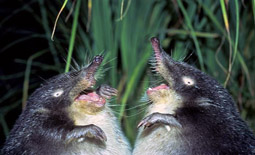 Moles are mammals of the insectivorous family, which are distributed on all continents of our planet, except Antarctica. There are about forty species of these underground inhabitants, but in our latitudes you can find only four of them. Moles are small animals, their length is 10-15 cm, weight 60-130 grams. These crumbs live underground, digging underground passages with their powerful front paws and building systems of multi-tiered galleries. The passages are located at a depth of 10-50 cm, and the mole makes its nest much deeper 1.5 - 2 meters. Moles feed on earthworms, insect larvae, caterpillars and everything that gets into its underground passages. The mating season occurs once a year and begins in early spring. Pregnancy lasts 40 days and results in the birth of 2-9 babies, which after 1.5 months are no different from their parents in size or activity. The life expectancy of a mole is 4-5 years.
Damage caused
One can only sympathize with connoisseurs of perfectly trimmed lawns and owners of tennis courts if their property has been taken over by moles. Under the grass layer there is loose and moist soil inhabited by earthworms. This is a paradise for a mole! In a couple of days, there will be no trace left of the ideal lawn. Restoring the original appearance of the lawn will result in serious financial and moral costs. In addition, moles, breaking through their endless passages, damage the roots of various plants, leading to their death. Also, as a result of permeating the soil with numerous passages, the land in these places becomes infertile.
Our method of exterminating moles and shrews on land plots.
Wasps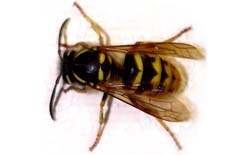 Wasps are a group of flying insects of the Hymenoptera family. There are about 20,000 species of these dangerous insects in nature. They are widespread throughout the world, with the exception of northern regions with sparse vegetation. Adult wasps feed on flower nectar, and when there is a shortage of it, they do not disdain various organic waste. The female wasp is armed with a sting, which is a weapon of attack and defense against various types of insectivores. Wasps live in nests with cells, in which they feed their larvae with the corpses of small insects. As a rule, they prefer to build nests in the ground, tree hollows, and also in the voids of various buildings. A typical wasp nest is a spherical object, the size of a football, attached to some surface with one side.
Damage caused
It is no secret that a wasp sting is very painful. The stung area quickly swells and as a result of an allergic reaction, a person's temperature rises, a severe headache occurs, and convulsions may also occur. The strongest reaction to a wasp sting is anaphylactic shock, which can occur in older people, as well as in people with reduced immunity. In this state, the victim loses consciousness, and respiratory and cardiac arrest often occur. In this situation, only immediate medical care can save a life.
Ticks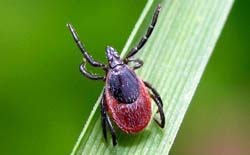 Ticks are small arthropods of the arachnid family, which includes about 30,000 species, 5,000 of which are encephalitic. Since ticks are moisture-loving insects, they are most often found in damp deciduous forests and places with tall grass, as well as in swampy areas. These insects feed on the blood of animals and people, sucking on open areas of skin for this. Tick activity begins to be observed in early April, and by mid-May their numbers increase millions of times. The lifespan of an adult insect is 3-4 months, and by the end of July the tick population is reduced to a minimum, but individual representatives can be found in October. At the end of May, having sated themselves with blood, females begin to lay eggs, from which larvae appear a month later, which immediately begin to look for a victim.
Damage caused
Ticks are carriers and spreaders of a terrible disease - tick-borne encephalitis, the consequences of which annually leave thousands of people disabled and die around the world. This virus affects the human central nervous system, which leads to paralysis and death. In most cases, infection from an insect occurs during bloodsucking. In addition to a bite, infection is possible when consuming raw milk, cows and goats infected with encephalitis.